Showing posts with label Sports. Show all posts

Tuesday, June 21, 2011

Serena Williams on Crying After Wimbledon Win: 'I've Been Through A Lot of Things That's Not Normal, Things You Guys Don't Even Know About'

It's been a year since tennis star Serena Williams played the sport she loves and after defeating...


[[ This is a content summary only. Visit my website for full links, other content, and more! ]]


Sunday, June 19, 2011

The All-Star Game Nonboycott of Arizona

My new VDARE column investigates the amusing rise and fall of the movement to boycott the baseball All-Star Game in Arizona next month. Who is it who really gets themselves enraged at Arizona voters? Not the average Mexican-American voter, that's for sure.

Friday, June 17, 2011

Why isn't LeBron James a fresh face?

Part of the reason everybody is sick of NBA star LeBron James is because, even though he is only 26-years-old officially, he looks like Red Foxx's uncle. The guy is really wrinkly. What's the deal? Is this from maturing young? Or did he have some chemical help? Or is he really like three years older, which is why he was so awesome when he was nominally 16?

Back in the 1980s, there was a very scary slugger named Jeff Leonard who hit a lot of highlight reel homeruns  (although not that many homers overall). His nickname was Old Penitentiary Face.

In case of alien invasion ...

I've noticed that when I read the obituaries of prominent people in New York Times, I always check the last paragraph to see how many grandchildren they have. The replacement rate would be four, and lots of high-achieving people die without getting to that number. 

On the other hand, I just noticed that golfer Jack Nicklaus (who is not dead, by the way -- his name just comes up whenever there's a major championship), whose career record of 18 major championships is looking more secure each month (Tiger has been stuck on 14 for just under three years), has 21 grandchildren. 

Nicklaus, who was born in 1940, had six children, and his children have averaged 3.5 kids each, which is a lot for a celebrity's kids these days. (I suspect that bequests from Grandpa Jack have helped his offspring go forth and multiply.)

Nicklaus is an example of high all-around competence. For one thing, he was a fat white 5'10" kid who could dunk a basketball. He's also one of very few celebrities to lose a large amount of weight for cosmetic purposes in mid-career without hurting performance. 

I'm not sure that I'd want to have Jack Nicklaus as my next door neighbor. (I suspect he would roll his eyes in a marked manner at my lawn care efforts.) But, in case of, say, alien invasion, I would be glad that there were more rather than fewer copies of his genes floating around in the human race. 

It might be interesting for somebody to go through obituaries of high achievers and build a database of numbers of children, grandchildren, and great grandchildren. 

Thursday, June 16, 2011

Redshirting

A reader who plays a lot of basketball alerts me to the name of an 8th grader often at the gym where he plays: Mickey Mitchell, a 6'7" point guard who can do a 360 dunk. And he's white. Here's a highlight reel. 

I played on my elementary school's basketball team in 8th grade. Our center was 6'2" and got an athletic scholarship to a private school. Mickey Mitchell would have beaten us playing 1 on 5.

He's also the top quarterback prospect in the 8th grade. It will be interesting to see which route he chooses.

How old is this 8th grader? He looks like a high school Homecoming King. Does he drive himself to elementary school?

Back in 2002, I wrote an article giving the pros and cons of "redshirting" your little boy by holding him back for a second year of kindergarten so that he'll be older as he goes through school. I still get emails from undecided parents about it, but I don't have much new to add. Has anybody done a big multiple regression or natural experiment study of this? There's a lot of interest out there.

It's something of a market failure that there aren't many direct ways to make money off of social science studies. There are a whole bunch of young parents who would pay, say, a $100 for some good advice on this topic, but there doesn't exist any particular way for this market demand to fund a social science project.

Tuesday, June 14, 2011

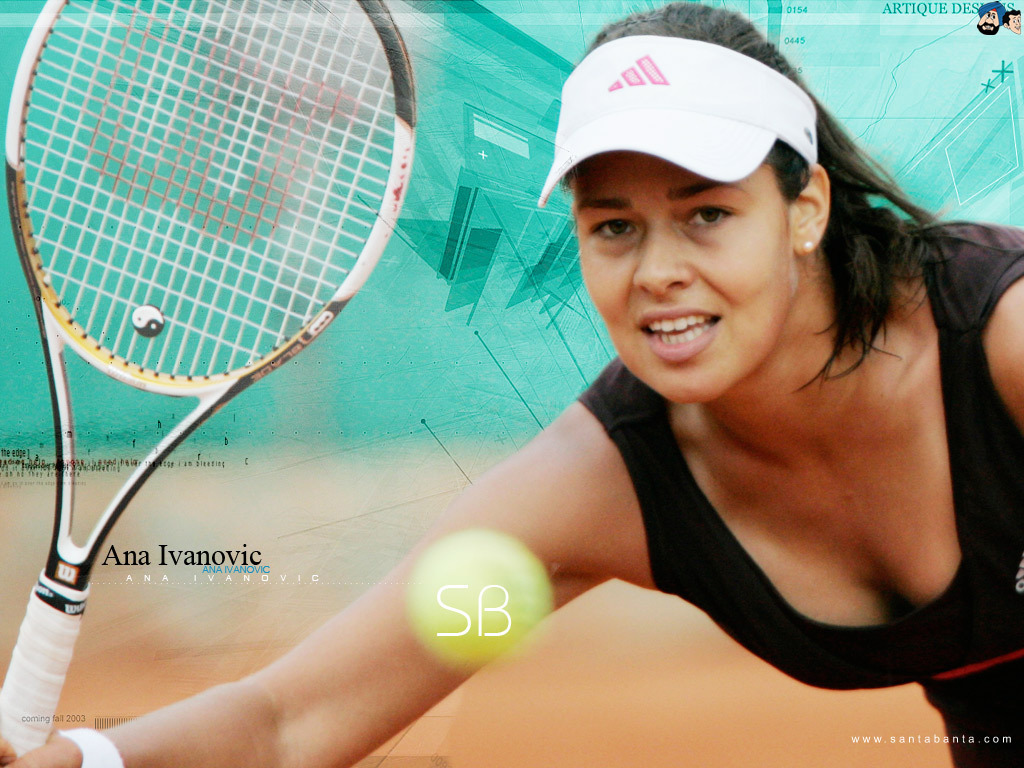
Ana Ivanovic HD Wallpaper,Hot Tennis Players Pictures,Sports Illustrated Pictures

Ana Ivanović  belongs to Serbia, Yugoslavia is a former World No. 1 Serbian women tennis player. ANA IVANOVIC is a hot and sexy Serbian Tennis beauty whose HD wallpapers you can save and download for woindows vista and windows 7.Ana Ivanovic Hot sensual Wallpapers in Sports Illustrated photo shoot Download. Ana Ivanovic Hot Desktop Backgrounds,Photos in HD High Quality Resolutions for Free for your latest ipad and acer laptops.Super Sexy Tennis Star Ana Ivanovic hot fhm pictures and sexy upskirt photo gallery for notebooks.


ana ivanovic wallpaper hot

sexy ana ivanovic wallpaper

Tennis ana ivanovic wallpaper

Sports illustrated ana ivanovic wallpaper

HD Pictures ana ivanovic photos

Sexy bikini ana ivanovic images

Tennis player ana ivanovic photos

Bikini Model ana ivanovic pictures

Monday, June 13, 2011

Why are white American basketball players mostly hicks from the sticks?

The triumph of a tall white guy in the NBA Finals might start the press wondering about an underexploited basketball resource: the 100,000,000 white guys in America, some of whom are quite tall, too. But don't count on it. That's not the kind of thing our society can focus upon.

A reader crunches the data on where white college basketball players come from:
Looking down the Rivals 150 list for the high school class of 2011 (roughly, the ranking of the top 150 high school seniors/entering college freshmen), I'm counting eight or nine white players.  I didn't necessarily look at all of them -- mostly the ones where I had any question.  (For example, I didn't bother to look at a picture for LeBryan Nash, who goes to Lincoln High School in Dallas -- given his name, and the fact that I know Lincoln to be almost entirely black and Hispanic, I don't really need to see a picture to know that he's black.)  Why eight or nine?  Well, there's no picture for Patrick Connaughton, but given that that name sounds very Irish, and that he's from Danvers, MA (which is less than 2 percent black), I'm guessing he's a white guy.  Naturally, Patrick is going to Notre Dame in the fall.

Yeah, Connaughton's kind of a miniature Kevin McHale -- a long armed Irishman.
Of more interest, though, is where these nine players are from.  Aside from Connaughton, the others are: 
- Cody Zeller, from Washington, Indiana (0.5% black) -- signed with Indiana
- Kyle Wiltjer, from Portland, Oregon (6.4% black -- very low for a major city) -- signed with Kentucky
- Alex Murphy, from Southborough, Massachusetts (0.9% black) -- signed with Duke
- Marshall Plumlee, from Warsaw, Indiana (2.0% black) -- signed with Duke (*Rivals lists him as being from North Carolina, but he goes to a prep school there; he's actually from Indiana)
- Hunter Mickelson, from Jonesboro, Arkansas (15.7% black) -- signed with Arkansas
- Josh Oglesby, from Cedar Rapids, Iowa (4.6% black) -- signed with Iowa
- Paul Jesperson, from Merrill, Wisconsin (0.2% black) -- signed with Virginia
- Jarrod Uthoff, from Cedar Rapids, Iowa -- signed with Wisconsin 
What immediately jumps out, of course, is that all of them (except Mickelson) are from some very, very white places.  (I looked up Mickelson's high school, Jonesboro Westside, and it turns out that his school is 97% white and only 1% black.  Mickelson is also 6'10".) 
And, this isn't a one-year blip.  Jimmer Fredette, the white college star of 2011, is from Glens Falls, New York (which is 2.3% black.)  Aside from Fredette, there's one other white American player projected to go in the first round of the draft -- Duke's Kyle Singler, who's from Medford, Oregon (0.6% black.)  Thinking back to 2006, you had two really good white players in college: Adam Morrison, from Spokane, Washington (2.1% black), and J.J. Redick, from Roanoke, Virginia (26.7% black -- but Redick went to a high school that was 91% white.)  Mike Miller of the Miami Heat is from Mitchell, South Dakota (0.4% black.)  And, of course, Larry Bird is from French Lick, Indiana (7.5% black.)  (David Lee, who averaged 16.5 ppg for the Warriors this season, seems to be the exception that proves the rule.  Lee is from St. Louis.) 
My theory is that athletic white kids growing up around a bunch of black kids are actively discouraged from playing basketball.  When I was in high school, I noticed that other high schools which were around 15-20% black often had one or two white guys on the end of the bench.  Schools that were 30% or more black often had all-black teams.  I had a friend in college who went to a high school that was 60% black, and he told me that his high school basketball coach wouldn't even let white guys try out.  And yeah, I know that it's all about the AAU circuit these days -- but if you can't even make your high school team (or you're on the end of the bench), why would you even bother trying out for an AAU team? 
On the other hand, high school basketball coaches in places like Iowa probably have the same prejudices about white players, but they might have only one or two black males in the entire school to work with, so naturally they're going to have to take on some white players.  So, if you take a white high school freshman who's 6'2" (presumably, he might grow to 6'6" or 6'7" by his senior year), and put him in Memphis, Tennessee, he's probably not even going to bother with basketball.  On the other hand, if he's going to high school in Iowa, he might try out for the basketball team, figure out that he's pretty good at it, and decide to pursue the sport. 
So what's happened to the white American star is, basically, he probably decides in high school that he's not going to bother with basketball and go play football or baseball.  Still, white kids from relatively homogeneous areas of the country at the very least get a chance to prove that they're good at basketball -- which white kids in more diverse areas basically don't.  The problem is, of course, that most of the remaining areas of the country that are homogeneous are sparsely populated. 
While it's true that a lot of basketball recruiting takes place very early, most college programs below the Big Six conferences (the BCS conferences in football) don't really fill their scholarships for the coming year until the spring before the freshmen enter college.  So while a "late bloomer" probably won't get a scholarship offer from a powerhouse program, they might still be able to catch on with a mid-major program and make a name for themselves there.

Most of the white athletic talent in America doesn't grow up in small towns, of course, it grows up in suburbs. If you look at white quarterbacks, they are typically sons of business managers, coaches, or ex-athletes. In the case of Andrew Luck, the golden boy Stanford QB who was runner-up in the Heisman last fall and is expected to be the #1 draft choice next year, his father is all three -- a former NFL quarterback, who then earned a law degree, and who has enjoyed a long list of high-paying executive jobs in sports management in the U.S. and Europe while coaching youth teams in his spare time.

One interesting question is: what's the cultural difference between football and basketball that makes for a less hostile environment for whites in football? My guess is that it's coaches coach in football, while recruiting is an even bigger part of the game in basketball. There's also a lack of AAU showcases for hotshots in football.

My impression is that American-born baseball players also tend to be from upscale backgrounds these days. For example, when I checked a couple of years ago, there appeared to be more good Jewish MLB players these days than possibly at any other time.

A few other notes on the 2011 Rivals 150: nine of the 150 have African surnames, two Spanish surnames, one (Martin Bruenig) is from Germany but looks like he's mixed.

Sunday, June 12, 2011

Where are the white American NBA stars?

With Dirk Nowitzki of Germany winning the NBA Finals MVP award tonight, my new VDARE article asks in timely fashion:
So that raises other questions almost never discussed in public: What happened to the NBA’s white American stars? Why are there so many more foreign white stars? Does this disparate impact amount to evidence of discrimination against whites in American basketball before they can reach the professional level? 
We can quantify the shortfall of white American players relative to white foreigners by looking at the list of the 50 best active players in terms of cumulative career achievement as measured by Win Shares on Basketball-Reference.com. 
There are nine white players out of the top 50, eight of whom grew up abroad: #3 is Nowitzki, #8 Steve Nash, #14 Pau Gasol, #22 Peja Stojakovic, #25 Manu Ginobili, #36 Andrei Kirilenko, #37 Zydrunas Ilgauskas, and #47 Hedo Turkoglu. 
Only one American white is in the top 50:  #28, Brad Miller, a 35-year-old center.  He’s the last white American to play in two NBA All Star games, back in 2003 and 2004. Like Larry Bird, Miller grew up in a small town in Indiana.
Why are there so few white American players? 

Read the whole thing there.

A few comments on the NBA Finals:

With 30 teams in the league, it's hard for any one player to win a championship. The random odds of winning are 1/30th for each year of your career and nobody's career lasts 30 years.

Obviously, a star is supposed to make it a lot likelier for his team to win, but how much likelier? Jason Kidd just won his first title after 17 years as a starter. He's second all time on the assists list behind John Stockton and third all time on the steals list behind Stockton and Michael Jordan. He's really good. Nowitzki just won his first title after 13 years in the league. He's really good, too.

So, the Kidd/Nowitzki average so far in their impressive careers is one title every fifteen years, or that a Hall of Famer will double the odds per year of a team winning the title over an average player.

This is an extremely small sample size, but it sounds kind of right. At hitting a baseball, Babe Ruth was 2.06 times as good as the average player over his entire career, Ted Williams 1.90 times, and Barry Bonds 1.81. In other words, it's really, really hard in baseball to be twice as good as the average player: only Babe Ruth has done it. Does being twice as good equate to twice as likely to win it all? Eh, now that I think about it, probably not. But I don't know whether it's more or less likely. Ruth didn't win a ton of World Series until he got a sidekick named Lou Gehrig, who was the 4th best hitter ever. Williams/Bonds only made it to two WS and didn't win either.

In basketball, I haven't found a statistic that quite matches up to OPS+ in baseball. I suspect it's easier in the NBA to be twice as good as the average as in the MLB, but it's still really hard. Team sizes are smaller in basketball than in baseball: 5 versus 9, and players go head to head sometimes as in Hakeem Olajuwon v. David Robinson and Patrick Ewing in the mid-90s Finals. The dominant player usually winds up the Finals MVP. Michael Jordan, for example, went to six Finals, won six, and won six Finals MVP awards.

So, the Finals MVP award is a big deal. The only guy who ever won it on a losing team was Jerry West of the Lakers in 1969 versus Bill Russell's last Celtics team.

But West's career shows how unusually great MJ was. West went to, I believe, ten Finals, and the Lakers won one (1972). He was 0-7 versus the mighty Boston Celtics and 1-2 v. a wonderfully balanced New York Knicks.

Yet, West was extremely good. He scored huge numbers of points, dished out lots of assists, and stole the ball frequently. He even regularly blocked shots from behind -- a memorable skill because the stripped shooter would continue with his jump shot routine as in a pantomime as a shocked look spread over his face as he realized that West was heading for a layup at the other end. He was smart -- as GM of the Lakers he landed Shaq and a 17-year-old Kobe in the same offseason. And West was intensely competitive,  a ferociously driven bastard, like Jordan. His admirers are happy and a bit surprised that he's lived into his 70s without self-combusting.

Yet, he won a grand title of one championship in 14 years, most of those years with Elgin Baylor on his team, some of those years with Wilt Chamberlain, a few of those years with Elgin and Wilt. Ironically, the year he won, 1972, he was terrible in the Finals. The Lakers were carried by Chamberlain. West was furious at himself.

So, I'm not terribly shocked that LeBron James, Dwyane Wade, and Chris Bosh only managed to lose a quite close Finals in their first year together. West, Baylor, and Chamberlain couldn't win in two years together. West finally won when the knee surgery-slowed Baylor retired in the fall of 1971, letting the Lakers turn into a running team.

So, I'm not hugely surprised that in their first year together, LeBron James, Dwyane Wade, and Chris Bosh merely lost a very close Finals, winding up only the 2nd best out of 30 teams.

LeBron has been famous for so long that a lot of people are kind of sick of him by now, but by the standards of NBA stars he seems like an okay guy. These days, everybody loves old dead guys with gaudy statistics but not many rings, like Wilt and Ted Williams. Maybe LeBron doesn't match up to Michael Jordan as a ruthless winner, but he's a lot more of a team player than Wilt or Ted.

European Creativity

My upcoming VDARE article is about the NBA finals between the Miami Heat's Big Three of LeBron James, Dwyane Wade, and Chris Bosh versus the Dallas Maverick's Big One of Dirk Nowitzki, but I finally found a picture to illustrate why the seven-foot German's fall-away jumper is, despite its awkward look, so hard to block. 

For a righthander, the right foot is the more adroit one, the one you prefer to balance upon while doing something delicate. For example, a righthanded baseball batter puts his weight on his back (right) foot while beginning his swing. Once he's committed himself, his weight shifts to his less-coordinated left foot. Similarly, if you are going to balance upon one foot while accurately hurling a ball overhand, whether shooting a basketball or throwing a baseball, the natural combination is to start by balancing more on the right foot. (When throwing a baseball pitch, a righthander pushes off his right foot but ends standing on his left foot. But the right foot is the dominant foot for a righthander).

During Nowitzki's NBA career, however, this righthander developed a a radically different shot where he takes a step back with his left foot, lifts his right leg, and jumps off his "wrong" (left) foot. 

One advantage to jumping off the left foot is you can get your right hand higher off the ground, so it's normally used in, say, open-court dunks. But the point of a dunk is to cut down on the need for precision by not releasing the ball until its inside the basket. So, for the difficult one-footed fall-away jump shot, using the left foot as the dominant foot is awkward.

The big advantage in leaping off the left foot, I believe, is that Nowitzki can simultaneously raise his right leg as a shield to keep the defender farther away. 

This picture, where the non-jumping defender is almost getting kicked in the groin by Nowitzki, represents an extreme example -- normally the defender leaps and Nowitzki keeps his knee bent more, his foot down, and his right leg more perpendicular to the flight of the ball so he doesn't get called for an offensive foul -- but the general principle is the same: Nowitzki's raised right leg keeps the defender too far away too block the shot. If the defender hits his upraised right leg, the ref might give Nowitzki two free throws. And even if the ref allows the defender some contact, Nowitzki's raised leg is more like a shock absorber than the torso or arm, so the bump is less likely to affect his aim.

Say you release your shot right-handed from above your right ear. If, like a normal step-back fall-away jump shooter, you jump off your right foot, you could try raising your left leg as a shield, but to get it in front of you where it's effective, you have to twist your body more unnaturally than when Nowitzki jumps off his left foot and raises his right leg. (Try it.)

Somebody must have tried shooting like this in the past, right? But I can't find any mention of it. Is it just too hard for most people to do accurately? Do you have to be kind of ambidextrous? Or do you just look too gawky doing it for it to be cool in America? Has anybody started to imitate Nowitzki? He's been hugely effective doing this.

Of course, just because a shot is effective doesn't mean it will be imitated -- Kareem Abdul-Jabbar poured in about a million skyhooks on TV between 1966 and 1990 and the rest of basketball treated the shot as if Kareem has the intellectual property rights to it tied up until 70 years after his death. The skyhook is the ultimate example of jumping off the left foot to maximize the right hand's height.

Interestingly, Nowitzki says he came up with this shot on his own, not with his off-season coach, physicist Holger Geschwindner,

From an interview with Geschwindner on the unusually high arc on Nowitzki's shots:
The reflection behind it is quite simple. How do you have to throw the ball so that, despite committing as many mistakes as possible, it still finds its way through the net? It’s a question of error tolerance. But every college student should be able to make the same calculations. Take differential and integral calculus. Make some derivations and create a curve. Everybody can do it. It’s no secret. The optimal angle depends on the player’s height and the distance. I’ve calculated it for Dirk and my other players.

My impression is that European basketball players have generally been more creative than American players. This goes back to the first European I can recall, BYU center KreÅ¡imir Ćosić of Yugoslavia, who battled Bill Walton of UCLA in the NCAA tournament in the early 70s. Walton was an amazing basketball thinker, but the big Croatian made him look like a stick-in-the-mud when it came to on-court weirdness. As a convert to Mormonism, presumably Ä†osić wasn't smoking as much dope as Walton was, but you couldn't tell from watching his game, which consisted of shots that maybe were old hat in Zagreb but weren't standard operating procedure in Pauley Pavilion and looked like something out of an H.R. Pufnstuf version of basketball.

I'm certainly not up to date on basketball, but my impression is that the 1970s conventional wisdom of black players as innovative and white players as fundamentalist was already outdated by the 1990s, partly because of the arrival of goofy Europeans, partly because blacks got much better at fundamentals, partly because white Americans got increasingly winnowed down to the ones who had something extra in their repertoire (not just Larry Bird -- anybody remember Jeff Hornacek and all the bizarre-looking shots he took?)

Forty years ago, Earl Monroe was doing all sorts of crazy spin moves, but I don't see that much statistical evidence they were overwhelmingly effective, which is why he remains a legend -- he didn't have that many successful followers. Moving laterally along the court in unexpected ways is cool, but it's mostly a distraction from moving up and at the rim. I watched a lot of Michael Jordan and, sure, he had a lot of "How did he do that?" plays, but not as many "How did he think of that?" ones. Jordan's game was fundamentally sound and (until, after his baseball exile, when he developed an effective fall-away jumper to save his body--here's MJ's video tutorial on shooting his two-footed fallway), his predominant instinct was the predictable but most rational one: to head for the rim.

Sunday, June 5, 2011

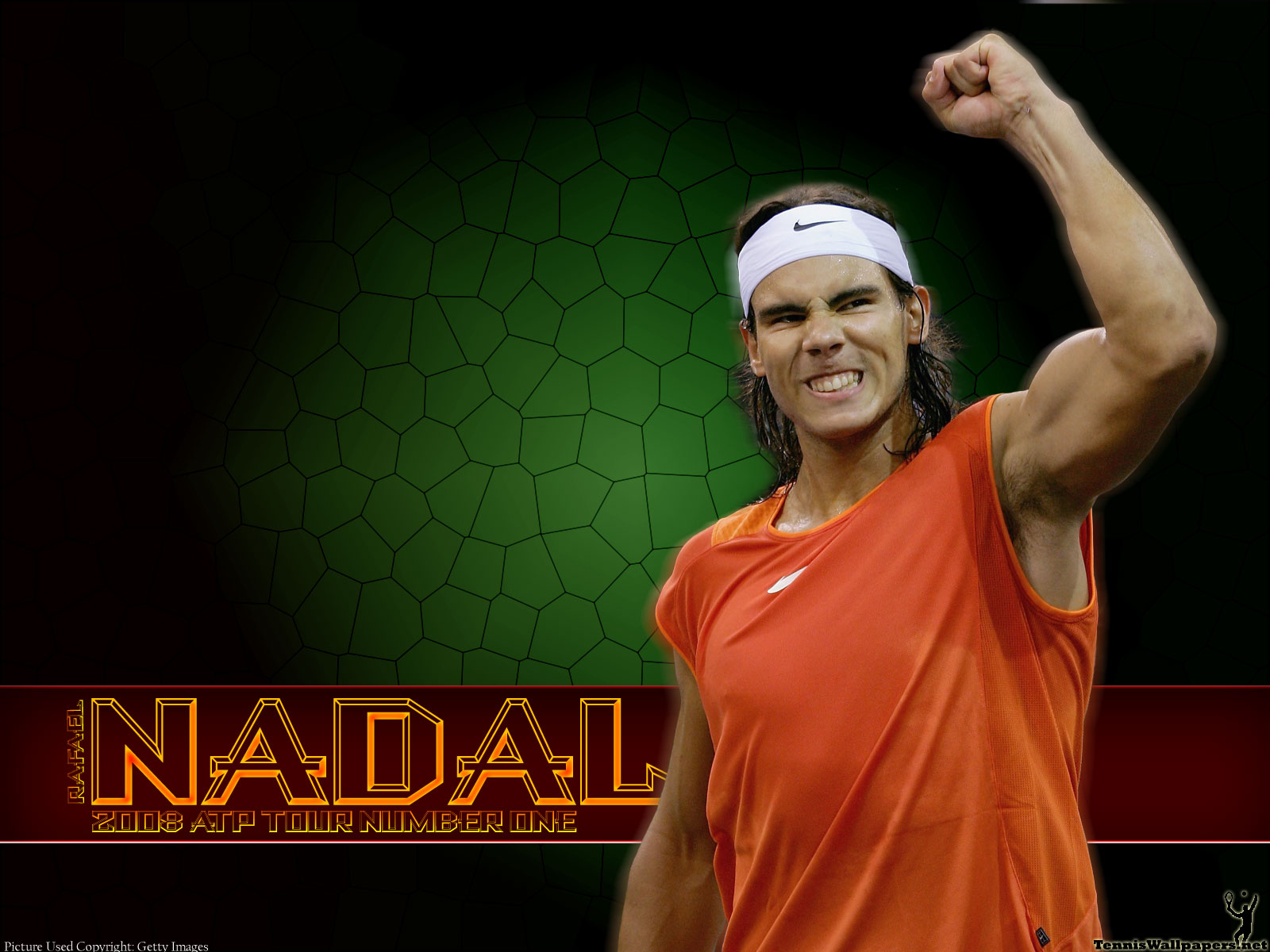
Rafael Nadal Tennis Wallpapers Sports Players Twitter Laptop Backgrounds

Rafael Nadal Tennis Wallpapers for your Iphone 4, Ipad, Ipod and laptop. Sports Players Latest Backgrounds for Twitter, Myspace, Multiply, Piczo, Tagged and Friendster.

Rafael Nadal Jumping Wallpapers

Rafael Nadal Wins Game Wallpapers

Rafael Nadal Playing Tennis Wallpapers

Rafael Nadal Trophy Wallpapers


Rafael Nadal Wimbledon Wallpapers

Rafael Nadal Winning Short Wallpapers

Rafael Nadal Sexy muscles Wallpapers

Rafael Nadal Hot Wallpapers


Friday, June 3, 2011

Golf Summit

From the Washington Post:
After months of public anticipation [really?], President Obama and House Speaker John A. Boehner (R-Ohio) have settled on a date to play golf together: Saturday, June 18.... 
Boehner is widely considered the much better player, having started playing when he was in his 20s. Later in life, as a successful businessman, he joined Wetherington Golf and Country Club outside Cincinnati. Obama didn’t really become a regular player until he became president, when he started using golf outings to maintain a level of normalcy to escape the intense life inside the presidential bubble. Of late, however, Obama has been improving his game as Boehner’s has deteriorated. 
According to Golf Digest, Obama is now a 17-handicap. That means that he usually shoots about a 90 on a course with an overall par of 72.

Not really. Handicaps are calculated, or at least they were 17 years ago when I wrote an article for Golf magazine on them, using only the better half of your last 20 rounds. And the handicap makes up only a majority of the gap (85%?) -- the idea is that the lower handicap golfer should win the majority of bets (because he's better), but at least it should be interesting. 

If somebody lists their handicap without a decimal point, they probably don't maintain an actual handicap. 
Boehner’s handicap has drifted up from about 5 or 6, before he became the GOP leader in 2007, to an 8.5, according to an official handicap site. Boehner has not broken 80 at his home course, Wetherington, since last May — at which point his campaign for Republicans to win the majority in the November midterms shifted into high gear.

On the other hand, the Christian Science Monitor reported in January that Boehner "hit the links some 120 times last year."

That's a lot. Considering that the guy lives in Washington and Ohio, that means about four months of the year are too cold for golf, and it rains a lot the rest of the year, so he must have been playing golf over half the days when the weather is reasonable. I'm glad he's got a job that's not too demanding.

Guys always tell you that you should play golf to become rich and powerful, but my sneaking suspicion is that a lot of guys become rich and powerful in order to play more golf.

Tuesday, May 31, 2011

College football

A reader sends along stats on graduation rates for football players at various colleges. Notre Dame is #1 at 96%, followed by Duke, Northwestern, and Rice and most of the rest of the top ten are private colleges or military academies, with Rutgers the highest ranking public university. (Northwestern recently had a quarterback named Kafka, and it's good to know that at probably at least some of his teammates were amused by that.)

The bottom ten tend to be obscure public schools like San Jose St., along with football-crazed powerhouses Oklahoma and Texas.

The biggest gap between football players graduation rates and all students is at UCLA (52% v. 89%) -- and UCLA isn't even getting very good football players. (UCLA used to have a low graduation rate for regular students because it could take 5 or 6 years to get all the classed you needed to graduate. But I think the spread of Advanced Placement tests in high school, among other reasons, has made it easier to graduate in 4 years.)

The biggest gap between the graduation rates of white football players and black football players was at Auburn. The third biggest race gap was at Oregon. Auburn and Oregon played for the national championship in January, so maybe that's a clever strategy: recruit smart white kids and lower your standards for black athletes.

Sunday, May 29, 2011

Calvinball

The history of most sports is quite woozy before the 19th Century. It's obvious, such as from 17th Century Dutch paintings of daily life, that males played a lot of sports, but most of the rules we are familiar with go back to English-speakers of the 19th Century, or a little earlier. (The oldest evidence of the rules of golf being written down, for example, are from Edinburgh in 1744.)

What were sports like before the Victorian institutionalization? 

My guess from watching little boys play, is that they had traditional rules that varied across time and place, with lots of Calvinball improvisations, followed by lots of arguments over whether that was fair or not. For example, legend has it that in 1823 at Rugby School, schoolboy William Webb Ellis picked up the ball and ran toward the goal, breaking traditional rules and inventing rugby.

Maybe that story is not exactly true, but it's likely that countless incidents like that have happened over the thousands of years -- somebody would do something new, then everybody would argue over it, and it would either become precedent or disallowed. But, then after awhile, something else would happen, and the rules would change some more, endlessly.

But there was a new spirit abroad in the English-speaking world over the last couple of hundred years or so that said rules should be standardized.

The coming of the railroad encouraged sportsmen to compete more around the country, which led to conflicts between local traditions. The railway also allowed older sportsmen to get together and standardize rules. The history of the evolution of American football in the 19th Century, for example, is largely a history of guys getting together in hotels next to train stations during the off season to argue about rules changes.

In contrast, little girls tend to change the rules to make people feel less bad.

How many sports have women invented? I looked up rhythmic gymnastics, and most of the names cited in the history section were men, but the first person cited in America was Catharine Beecher (of the exhaustingly energetic Beechers -- Harriet Beecher Stowe was her sister). 

The institutionalization of sports is a major human accomplishment. But are standardized rules for sports good in the long run, or is it better for young males to get more experience making up, debating, and agreeing upon their own rules ad hoc?

Nobody knows nothing

Karl Smith and Kevin Drum point to a new Gallup Poll asking "Just your best guess, what percentage of Americans today are gay or lesbian?" The mean guess was a ridiculous 24.6%. Only 4% said less than 5%, which is probably the best guess.

Polling companies seldom ask questions on which people can make obvious fools of themselves, since those can raise questions about the value of opinion polls.

Looking at the demographic crosstabs, it's evident that low intelligence people were most likely to wildly overestimate the percentage of homosexuals: 53% of people making under $30,000 annually said that at least 25% of the population was gay, and 47% of those with no more than a high school education. 43% of Democrats versus 24% of Republicans got the question wildly wrong.

In general, people are terrible at estimating or remembering demographic statistics. A 2001 Gallup survey, right after the release of 2000 Census results, found that the average American estimated that 33% of the population was black and 29% were Hispanic. That adds up to 62%, but who's counting? Not most people.

In that 2001 survey, nonwhites estimated that 40% of the population was black and 35% was Hispanic (adding up to 75%). In contrast, people claiming postgraduate degrees estimated that 25% were black and 24% Hispanic (only about double the Census numbers), which proves the value of advanced education.

Here, roughly, is how people think: You ask somebody how many Americans are Hispanic and they think of that guy on Saturday Night Live in the 1970s saying "Beisbol been berry berry good to me." And what's more American than baseball? And there are a lot of Latin ballplayers. But the guy on SNL who said that was black. So that means there are a lot of guys who are black comedians and also a lot of guys who are Hispanic baseball players. 

Something that people almost never do is think about fields in which the group they are being asked about is rarely represented. If you ask people about gays, they think about fashion designers, musical actors, Republican politicians, interior decorators, and the like. They don't think about, say, oil company engineers or baseball players.

Four years ago on iSteve, I asked "Where are the famous old gay baseball players?" 

Baseball players are extremely famous. I have a book by Bill James that lists his picks of the top 900 baseball players of all time, and I'd heard of the large majority of them, plus most of his picks for the next 225 best players. I could tell you facts about well over 500 baseball players.

I pointed out that while I had heard of two minor major league players were gay, I had never heard of a famous player who turned out to be gay. I said I'm sure I'm not aware of some, but I would suspect that no more than 1.0% of famous baseball players were homosexual. 

This is not to say that baseball players are representative of the general population. I'm just saying that famous baseball players are one intensely studied group, of which very few turn out have been gay.

I'd heard lots of rumors over the years, but most of them were obvious gay fantasies about handsome, manly athletes like Mike Piazza and Sandy Koufax (The elegant and taciturn Koufax, who grew up the son of a rabbi in Brooklyn, has lived most of his post-retirement life in conservative small rural towns with his various wives and girlfriends, which would be an extremely improbable choice of locales for a gay Jewish celebrity.) 

However, a number of commenters pointed to one famous old baseball player as not being publicly out of the closet, but his homosexuality being open knowledge. He's not a Hall of Famer but he's definitely one of the top 500 players of all time. I won't put his name here, but if you are interested, you can make your guess, then go look at the comments to my 2007 post and see if your guess matches up.

The funny thing is that I'd never heard rumors about him, probably because he's not the kind of individual to excite gay fantasies: not a great athlete but instead a highly skilled craftsman. He's a best-case scenario for a stereotypical gay athlete: famously charming, cultivated, fastidious, sociable, does lots of charity work: a gentleman. 

He went straight from high school to the majors, but seems like a college-educated player. I once wrote a spec screenplay for an HBO sports comedy show and modeled a basketball player on this baseball player (I hadn't heard the gay rumors yet). In my little plot, this center from Tulane had dined his way out of the NBA, packing on 20 pounds of solid fat, but was now looking forward to winding up his playing career in the Italian basketball league because of the opportunity to sample Italy's regional cuisines on road trips.

During his long career, this baseball player was fairly famous for being famous. That's because he'd do the kind of socially gracious, media-friendly things that ballplayers almost never do. For example, when traded to Montreal, he learned French, which made him hugely popular with local fans.

But his name doesn't come up much because he doesn't Shatter Stereotypes. 

Thursday, May 26, 2011

Choose your parents wisely

Here's the abstract of an academic article by Joshua Kjerulf Dubrow and jimi adams that shows that, as usual, family helps:
The popular image of the African American National Basketball Association (NBA) player as rising from the ‘ghetto’ to international fame and fortune misleads academics and publics alike. This false image is fueled, in part, by critical shortcomings in empirical research on the relationship between race, sport, and occupational mobility: these studies have not adequately examined differences in social class and family structure backgrounds across, and especially within, racial groups. To address this problem, we empirically investigate how the intersection of race, social class and family structure background influences entry into the NBA. Information on social class and family structure background for a subpopulation of NBA players (N = 155) comes from 245 articles published in local, regional and national newspapers between 1994 and 2004. We find that, after accounting for methodological problems common in newspaper data, most NBA players come from relatively advantaged social origins and African Americans from disadvantaged social origins have lower odds of being in the NBA than African American and white players from relatively advantaged origins.

I was nodding my head until that last bit. Watching Dirk Nowitzki dominate on the sports highlights gets me to wondering once again: how come there are more top white basketball players from foreign countries (e.g., Nowitzki, Nash, the Gasols, Ginobili, etc.) than from the U.S.? Sure, there are more tall white guys abroad, but Germany isn't exactly hoops crazy. 

Top white American basketball players do seem to come from wealthy basketball families fairly often: Kevin Love's dad was in the NBA and Kiki Vandeweghe's dad was an NBA player who became the Lakers' team doctor. But, it seems as if white fathers today who aren't ex-basketball stars are more likely to groom their tall, athletic sons to be quarterbacks rather than basketball players. I remember back in the late 1960s how amazed NFL fans were that Roman Gabriel, at 6'5" had become a quarterback rather than a basketball player. Times have changed. (By the way, Gabriel's father was from the Philippines. His mother was Irish.)

Clearly, one reason for this finding about blacks is that jail wrecks the careers of a fair number of athletic blacks from underclass backgrounds. It would be interesting to look at arrest and prison statistics on height and race to see if being very tall helps a black guy be less likely to stay out of jail because he's being helped along toward a basketball career. My prediction would be that a lower percentage of very tall black men are in prison than in the total black population. 

A few years ago, I made up a list of the top 10 centers in NBA history, and most seemed pretty smart. Center is the position where sheer height matters most, yet having something on the ball must also help. Of the top 10 centers, only Moses Malone, with his almost incomprehensible rural Southern accent, was clearly from the least advantaged part of society. Patrick Ewing was pretty taciturn too, but a lot of other top centers, such as Bill Russell and Wilt Chamberlain, were famously good interviews. David Robinson scored 1320 on the SAT (old style) and Kareem 1130.

Also, I suspect that having an outstandingly athletic son can sometimes keep fathers from straying too far, thus keeping the kid at a higher social level because his family is intact.

The small number of top players from Africa are mostly from the top of their societies: Olajuwon's dad was rich, Mutumbo's dad was a high school principal, and Luol Deng's dad was a cabinet minister in the Sudan. The late Manute Bol was a herdsman, however.

Friday, May 13, 2011

Is Tiger juiced out?

Yesterday, Tiger Woods withdrew in pain after playing the first nine holes of the The Players' Championship in 42 strokes. (Hey, I've shot 42 for nine holes!) TPC is the fifth most important golf tournament of the year, so quitting isn't something Woods takes lightly. His body appears to be falling apart at an oddly early age. Why?

Back in a May 2009 column in Taki's Magazine, Tiger Juice, I was among the first to publicly raise the possibility that Tiger Woods had been using performance-enhancing drugs. (This was a half-year before the bimbo eruptions, back when his mastery of the media was nearly complete, other than one bizarre article starring him in Men's Fitness.) By 2008, his last major championship victory, he was massively more muscular than when he was a wiry 24-year-old in 2000, when winning three majors.

Tiger's future is mildly interesting, but coming to a more accurate understanding of his past is more important. There's a fundamental intellectual issue that persuades me to work at trying to make sense of the career of the most famous American athlete since Michael Jordan. It's always been obvious that much of the appeal of sports is as a test of masculinity, in the basic sense of muscularity. On the other hand, we also like to believe that sports are something more than just that: a test not just of masculinity / muscularity, but of manliness, a broader, nobler concept. The emerging evidence over the last generation that so many famous athletes were triumphing by buying more masculinity / muscularity in a bottle is a little too reductionist even for my tastes. Fortunately, I could always point to golf as a sport where the guy with the biggest muscles didn't have a huge advantage. Sure, it's not a terribly masculine sport, but that allows manliness to play a larger role.

Or, at least that's what I thought, Well ...

What's wrong with Tiger besides the wounds to his psyche? (Golf fans really do take respectability seriously, unlike NBA fans. For example, in 2001, Bill Clinton's feelers for membership at prestigious Westchester County golf clubs like Winged Foot were repeatedly rejected, in part because of Monica Lewinsky -- he ended up at the Century , a Jewish club with a fine but not very famous course. For whatever reason, Jewish country clubs tend not to host big tournaments. Are they discriminated against by the very WASPy USGA, or do they not like to share? For the last 20 years, the USGA has required a quota system for membership of private clubs hosting USGA tournaments -- all memberships must be integrated, e.g., have at least one black member -- and perhaps Jewish clubs don't want to deal with quotas. I don't know. It's an interesting topic, but not one that is discussed much other than off-the-record out on the course.)

Tiger's body appears to be falling apart at an age, 35, when most golfers are in their primes. In early 2008, I had calculated that Woods was on track to smash Jack Nicklaus's career record of 18 pro major championships with a total of 26. Today, he's still stuck on 14. His last major championship victory was at age 32 in the U.S. Open at Torrey Pines, where he played in pain.

In contrast, the primes of other golfers appear to be getting longer on average. Vijay Singh, for example, won 12 tournaments before turning 40 in early 2003 and 22 in his forties, more than Nicklaus and Arnold Palmer did combined. Walking six miles per day on soft grass is not normally a physically debilitating lifestyle. It's like an ideal hunter-gatherer lifestyle -- walk 200 yards and throw a spear at a rabbit -- without the part where the woolly mammoth tries to toss you with his tusks.

In the Wall Street Journal, John Paul Newport comments:
Physically, after years of bodybuilding and exceedingly high-torque swinging, Woods is an old 35. Mentally, after decades of on-course domination and little in the way of comeuppance (golfwise, at least), he’s an immature 35. He doesn’t know how to adapt to decline. 
If Woods wants to win again, given his increasingly apparent physical limitations, he doesn’t need to reengineer his swing, as he has been trying to do with coach Sean Foley. He needs to reengineer himself, as a crafty veteran. With 71 PGA Tour victories and 14 majors under his belt, he’s got more wile, experience and golf smarts at his disposal than anyone playing the game – way more than enough to win tournaments with imagination alone. 

In contrast, Phil Mickelson appears to be as big an idiot on the course as he is rumored to be off the course (colossal sports gambling debt, illegitimate child, etc etc -- just rumors, of course).
Bubba Watson was right last week when he said, “I think Tiger is going the wrong way. I think he’s so mental right now with his swing. Just go out there and play golf.” If and when Tiger’s body heals enough to start playing regularly again, he needs to let go of the search for a perfect swing and learn to play “old man” golf: put the ball out there somewhere in or near the fairway, and then let the wizard within take over.

Ben Hogan won six major championships in his forties after a horrific car crash that left him permanently shuffling about. Lee Trevino was a 5'7" Mexican who got fried by lightning at age 35, permanently messing with his back, yet battled back to lead the Tour in stroke average in 1980 at age 40, win a last major at age 44, and then dominate over-50 Senior golf for a few years. 

Golf isn't that hard, physically. Or at least it didn't used to be. On the other hand, perhaps improvements in clubs and balls have reduced the element of guile in the game, making it more of a test of whose body can hit the ball longest and straightest. 

For example, Trevino in his prime was famous for playing a fade that curved left to right with some backspin. This sacrificed length but kept the ball from rolling into trouble. In his Senior Tour days, he switched to a draw that curves from right to length with some topspin to get more length after the ball hit the ground. But these days, most players have their driver and ball choice optimized by video and computer analysis to hit it long and straight. All that shaping the shot stuff sounds very 20th Century.

Thursday, April 14, 2011

Phenomenon Lionel Messi Gold Ball HD Wallpaper

Lionel Messi with the Golden Ball, 2011 free download wallpapers  Resolution: 1600px X 1067px Widescreen

Amazing Lionel Messi FCB HD Wallpaper

Lionel La Puiga Messi FC Barcelona, 2011 free download wallpapers  Resolution: 1600px X 1000px WideScreen

Kaka World Player of the Year HD Wallpaper

FIFA's 2007 Player of the Year KAKA, 2011 free download wallpapers  Resolution: 1280px X 1024px

United States FIFA World Cup HD Wallpaper

Official Banner FIFA 2010 USA, 2011 free download wallpapers  Resolution: 1280px X 1024px